
Install the app
How to install the app on iOS
Follow along with the video below to see how to install our site as a web app on your home screen.

Note: This feature currently requires accessing the site using the built-in Safari browser.
-
New here? Register here now for access to all the forums, download game torrents, private messages, polls, Sportsbook, etc. Plus, stay connected and follow BP on Instagram @buckeyeplanet and Facebook.
You are using an out of date browser. It may not display this or other websites correctly.
You should upgrade or use an alternative browser.
You should upgrade or use an alternative browser.
Latest activity

Filters
Show only:

NFL Discussion (Official Thread)
- By Jagdaddy
- Professional Football
- 14043 Replies
Also, just about everybody has it better than the Chargers. LOL.
Upvote
0
NFL Discussion (Official Thread)
- By Jagdaddy
- Professional Football
- 14043 Replies
Took a look at the Jets-Bears box score just to see if Garrett Wilson had anything going on and saw something amazing. The Bears ran 89 offensive plays to the Jets 32, had 34 first downs to the Jets 7, had 42:45 time of possession, and did this with having two turnovers and the Jets none. WITAF?
Upvote
0
Cincinnati Bengals (Same Ole Bengals)

- By Honor&Glory
- Professional Football
- 4756 Replies
1-35. Dude would rather be in Paris walking runways.
Upvote
0
Savion Hiter (RB ttun)

- College Football
- 73 Replies
Can’t put it all on Hiter. Unless you are Barry Sanders or Adrian Peterson, you aren’t going to do shit if your oline sucks. Their oline might be the worst in the big ten.I think it's funny that they actually believe that a true freshman without a year of strength training and experience in their system is going to be at the top of his game.
There is the recruit hype, the preseason hype and then there is reality.
This is the issue with many Scum fans, they don't accept reality.
They should look at this year as valuable because he is getting real experience that may pay off down the line.
Upvote
0

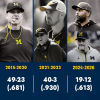
2026 scUM Shenanigans, Arguments, Arrogant Twatwaffles, Emasculated Cucks, Feckless Marmots, Dirty Cheaters "Mid"chigan

- By osuvictory1
- College Football
- 2023 Replies
Thanks.... Forgot the specifics. Just knew it was enough to not coach there again while he has the cognitive ability to do it. LolHarbaugh got 14 years of show cause - 4 for Burgergate plus 10 more for sign stealing.
Plus he has a pending 12-game suspension if he ever returns to CFB.
Chargers basically gifted him $80 million
Upvote
0

2026 tOSU Offense Discussion

- By Gizmo
- Buckeye Football
- 434 Replies
yeah. I said on the 4th down play in final drive, "I want to see them kick here. I know it's not a clutch situation, but I don't remember the last time I saw a 4th quarter FG go through the uprights."The fact we haven't made a 50 yard goal since 2019 is an underrated ridiculous stat
Upvote
0
2026 scUM Shenanigans, Arguments, Arrogant Twatwaffles, Emasculated Cucks, Feckless Marmots, Dirty Cheaters "Mid"chigan

- By LordJeffBuck
- College Football
- 2023 Replies
Harbaugh got 14 years of show cause - 4 for Burgergate plus 10 more for sign stealing.They are in true denial and cope stage. Harbaugh is lucky he only got a decade show cause.
Plus he has a pending 12-game suspension if he ever returns to CFB.
Upvote
0
2026 tOSU Offense Discussion

- By Tanner
- Buckeye Football
- 434 Replies
The fact we haven't made a 50 yard goal since 2019 is an underrated ridiculous stat
Upvote
0
RB Legend Bey (Official Thread)
- By Onebuckfan
- Buckeye Football
- 375 Replies
If he can’t play in a blowout..he can’t play. It’s amazing he can’t get a play.
Upvote
0
2026 scUM Shenanigans, Arguments, Arrogant Twatwaffles, Emasculated Cucks, Feckless Marmots, Dirty Cheaters "Mid"chigan
- By osuvictory1
- College Football
- 2023 Replies
I think what you are seeing is actual coaching going on. He needs to be broken apart and put back together in real time. It's what he needs and probably next to impossible with him.John Markell is coaching football up there now?
What the kid actually needs is to do a Raiola. Transfer out and be willing to sit and learn.
Upvote
0
RB Legend Bey (Official Thread)

- By RB07OSU
- Buckeye Football
- 375 Replies
In a more traditional setting before the extended schedule I would tend to agree, but still a lot of time to earn trust back and get his head on straight. Even if it's just for some wrinkles in the play book and kick returns. Just needs to keep his head on straight and his opportunities will come.If he isn’t playing by now I doubt it becomes meaningful at any other point this season.
I’d absolutely love to look like a fucking idiot and be wrong..trust me.
And things could still change, but if he didn’t play against KSU you knew it was not going to happen at Iowa; so unless something changed fast the season goes just as quickly,
Upvote
0
Savion Hiter (RB ttun)
- By osuvictory1
- College Football
- 73 Replies
I think it's funny that they actually believe that a true freshman without a year of strength training and experience in their system is going to be at the top of his game.
There is the recruit hype, the preseason hype and then there is reality.
This is the issue with many Scum fans, they don't accept reality.
They should look at this year as valuable because he is getting real experience that may pay off down the line.
Upvote
0
2026 scUM Shenanigans, Arguments, Arrogant Twatwaffles, Emasculated Cucks, Feckless Marmots, Dirty Cheaters "Mid"chigan

- By ORD_Buckeye
- College Football
- 2023 Replies
John Markell is coaching football up there now?How is it possible that Underwood has managed to regress? He was crappy last year but he's actually fucking worse this year
Upvote
0
Cincinnati Bengals (Same Ole Bengals)

- By BuckyKatt
- Professional Football
- 4756 Replies
Same Ole Bungles.This team is so bad at tackling.
Upvote
0
2026 scUM Shenanigans, Arguments, Arrogant Twatwaffles, Emasculated Cucks, Feckless Marmots, Dirty Cheaters "Mid"chigan
- By osuvictory1
- College Football
- 2023 Replies
Ryan Mallet was the only legit QB they had during the Rich Rod days, and he transferred.Don't forget Can O'Korn.
Upvote
0
Load more

