Formula 1 Standings 2025
| 1Lando Norris |
390 |
| 2Oscar Piastri |
366 |
| 3Max Verstappen |
366 |
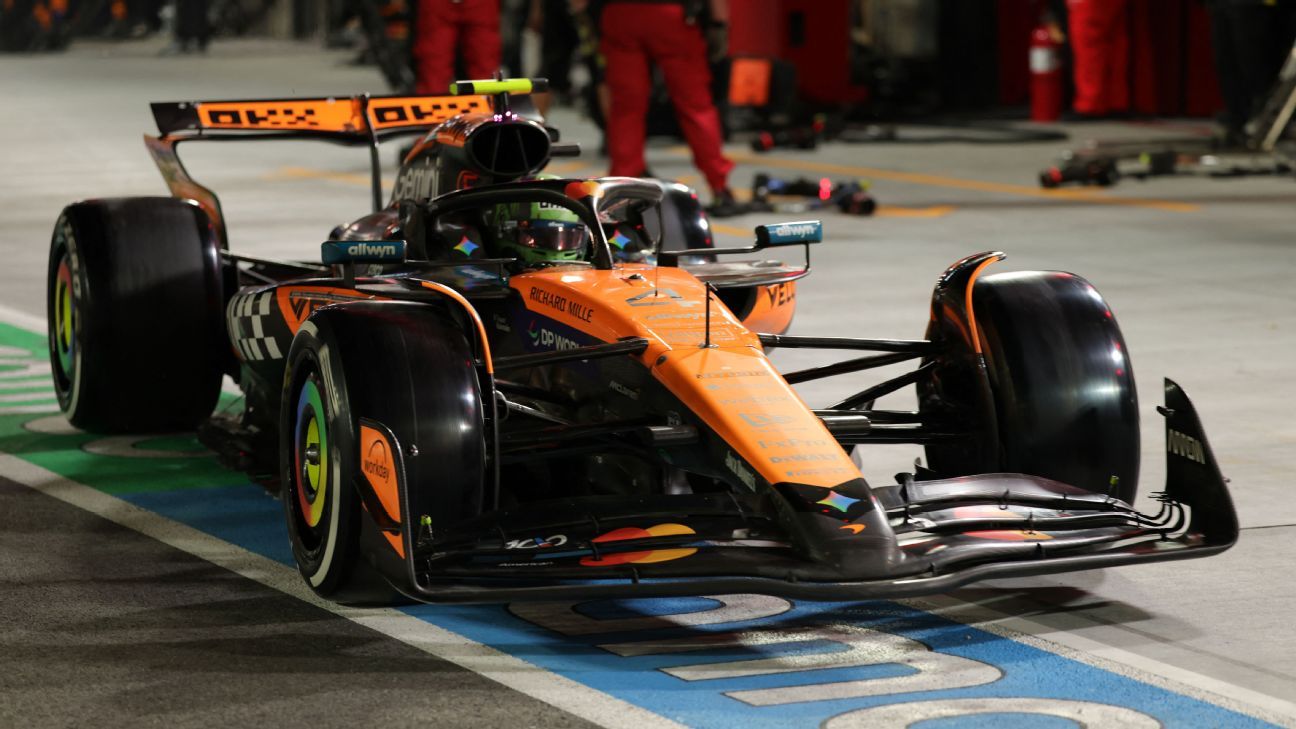
McLaren drivers Lando Norris and Oscar Piastri have been disqualified from the Las Vegas Grand Prix for illegal plank wear, propelling Max Verstappen right back into the drivers' title fight.

www.espn.com
Las Vegas GP: McLaren's Norris, Piastri disqualified for illegal plank wear
McLaren drivers Lando Norris and Oscar Piastri have been disqualified from the Las Vegas Grand Prix for illegal plank wear, propelling Max Verstappen right back into the drivers' title fight.
F1's rulebook states the thickness of the planks underneath both cars must be no less than 9mm, but McLaren's two cars were found to be below that after Saturday night's race.
After the race, McLaren was summoned to the stewards and found to have been in breach of the regulations, which is a slam-dunk disqualification.
The sensational twist in 2025's title battle means Verstappen, who had beaten Norris to victory in the race, is now level on points with Piastri on 366 and stands 24 behind Norris with two races left to run.
A technical infraction as small as a hair's width saw both McLarens disqualified from Vegas, which has enormous ramifications for F1's title fight.
www.espn.com
McLaren's microscopic Vegas DQ brings Verstappen into title fight
Why were the cars disqualified?
The FIA's statements for both disqualifications made clear that the stewards "strongly held the view that the breach was unintentional and that there was not deliberate attempt to circumvent the regulations," but when it comes to measuring plank wear, the technical regulations leave no margin for error -- even if it can be measured in micrometers.
Plank material is designed to wear away over the course of a race as it rubs against the track surface -- in part protecting the underside of the car but also allowing the FIA to ensure a minimum ride height is maintained. Running the car low to the ground can yield more performance from the underfloor aerodynamics, but run it too low and a team runs the risk of inducing potentially dangerous losses of downforce as the car bottoms out.
To ensure the cars run in a safe condition, the FIA's postrace checks monitor the wear of the plank of all points scorers. The governing body's scrutineers measure four holes on the plank that must be 10 millimeters deep (plus or minus 0.2) at the start of the race and no less than 9 deep at the end of the race. On Norris' car, the depth of two of the four measuring holes was found to be below 9, and on Piastri's car, the depth was below 9 on three of the four holes.
At this year's Chinese Grand Prix, Lewis Hamilton was disqualified for the same infringement, albeit with plank wear that was 0.5 millimeters beyond the amount permitted.
Why was McLaren running its car so low?
The current generation of F1 cars are extremely sensitive to ride height. Every millimeter lower to the ground the car runs, the more it seals and energizes the flow of air passing under the car. The fast-moving air between the floor of the car and the track surface creates low pressure, known as ground effect, that essentially sucks the car to the track, providing a large amount of the downforce that allows an F1 car to corner at such mind-bending speeds.
Every race weekend, teams search for the perfect ride height in order to find the balance between maximizing the aerodynamic performance of the floor while ensuring plank wear remains at legal levels. Although simulations provide a starting point for ride height settings, teams rely heavily on track running during practice to make a final decision before locking in the car's final setup ahead of qualifying.
Bumpy track surfaces can increase the level of wear but are usually accounted for by the teams, and given the threat of disqualification if the car is found illegal, engineers would usually err on the side of caution. And while it's true that practice time in Las Vegas was reduced by two red flags on Thursday evening and a partially wet final practice session, making data on plank wear limited, such limitations to practice are not uncommon during a race weekend.
In their statement in the early hours of Sunday morning, the stewards said McLaren cited the bouncing of the car (known in F1 as porpoising) and the limited practice time as reasons for the unexpected wear level.
"The team argued that mitigating circumstances existed in that there was additional and unexpected porpoising at this event, limited opportunity to test due to the weather on Day 1, and shortened practice sessions."
McLaren team principal Andrea Stella added in a statement: "During the race, both cars experienced unexpected, high levels of porpoising not seen in the practice sessions, which led to excessive contact with the ground. We are investigating the reasons for this behavior of the car, including the effect of accidental damage sustained by both cars, which we found after the race, and that led to an increase of movement of the floor.
"As the FIA noted, the breach was unintentional, there was no deliberate attempt to circumvent the regulations, and mitigating circumstances also existed."
There were signs McLaren was aware of the problem during the race after Norris' race engineer told him to lift off the throttle and coast at the end of straights. By doing so, McLaren hoped Norris would reduce the peak aerodynamic load at the end of the straights and minimize the wear to the floor when it was running closest to the ground. Despite lapping more than 3.5 seconds off the pace at times, ultimately Norris' efforts did not go far enough.
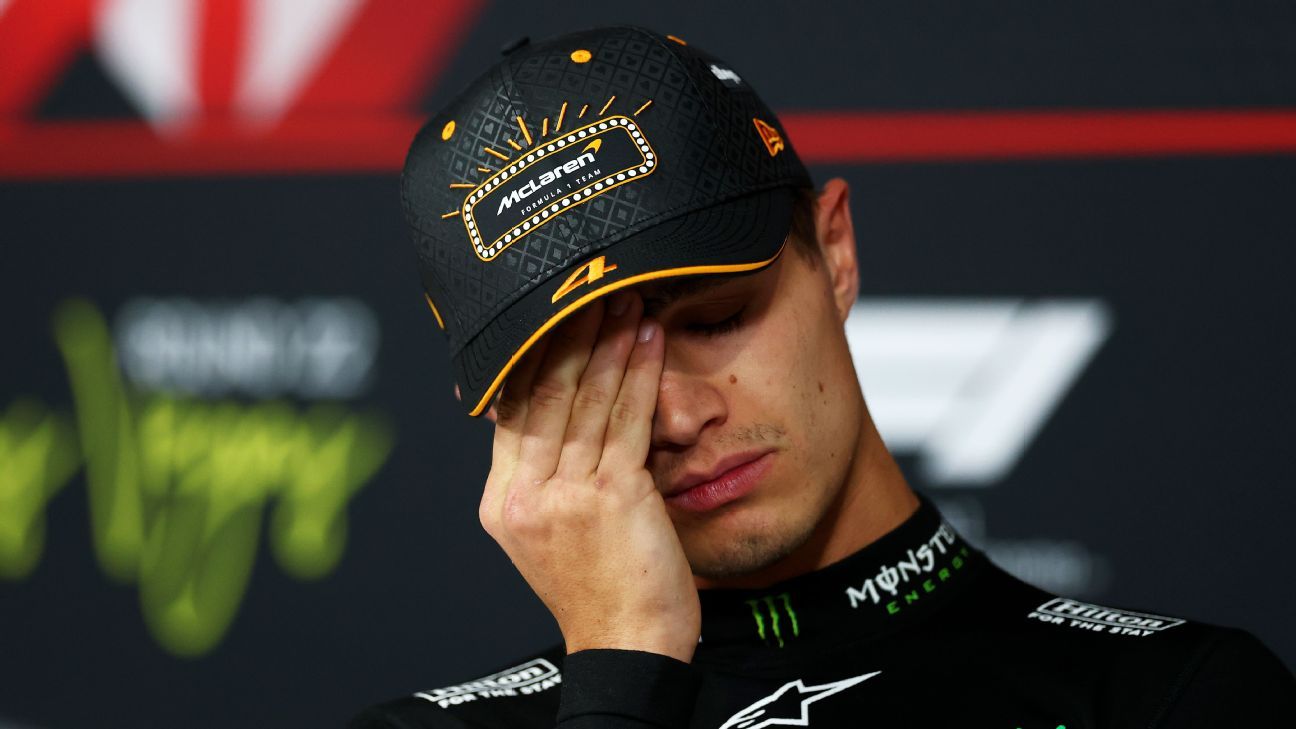
"We had to do some managing towards the end of the race and now we know it was due to some issues on our car, which have unfortunately resulted in us being disqualified," Norris said in a statement issued by McLaren. "It's frustrating to lose so many points. As a team, we're always pushing to find as much performance as we can, and we clearly didn't get that balance right today."









/Bottas%20Perez%20header%20image.webp)

/TWGMS-F1-Announcement-1298%20(1)%20(1).webp)