• New here? Register here now for access to all the forums, download game torrents, private messages, polls, Sportsbook, etc. Plus, stay connected and follow BP on Instagram @buckeyeplanet and Facebook.

Should semipro/college players be paid, or allowed to sell their stuff? (NIL and Revenue Sharing)

Stanford players are maybe taking the first meaningful step toward unionization.

It's worth the read. They make some good points and it's all very much in the spirit of "make it exist, then make it perfect" kind of view which is the only way all of this gets sorted imo. They also take a slap at Penn State out of nowhere so there is that too.

"There's some legislation going on trying to standardize a lot of the stuff in college football and give us a legal standard. I have a couple issues with it," Umeh said. "College football players should have a voice on the future. They know what works best for them and their teams. I'm not saying college football should be run by the players, but I think the players should have more of a voice."

That is what I have been getting at regarding the proposed bill from congress. The players have no say, it's just the old powers that be trying to still be the only powers that be and dressing it up in language of "good for the sport".

Personally, I don't see why the good football players or basketball players would want to voluntarily join up but overall, this step does have to be taken.

I also still don't see how you lump nonrevenue athletes with revenue athletes but time will tell.
 
Upvote 0
This sounds familiar

As the college sports structure evolves, it might even be beneficial for some schools if they could simply let investors fund the roster, pay the coaches and take on the profit/loss risk. In exchange, the school would get paid for use of facilities and trademarks to fund their other sports.

and yes, already happening to a degree

In a sense, it's already in motion. Utah finalized a nine-figure deal with Otro Capital earlier this year, forming a new company that will handle revenue-generating aspects of the athletic program. Michigan State just unveiled a new athletic department structure with $100 million in seed money, part of which is a for-profit subsidiary called Spartan Media Ventures where investors will get a return.

In early August, LSU is gathering donors at the governors' mansion for a "first look at an alternative revenue-generating opportunity for LSU athletics that is first of its kind nationally and could quite possibly change the future of college sports in America," according to the invitation. It's expected to include some type of structure where investors/donors could buy a "share" of a privatized athletic department.
 
Upvote 0

Big Ten, SEC support college sports bill, reviving Senate chances​

The Big Ten and SEC agreed Friday night to support a Senate bill that seeks to regulate college sports, ending a breakneck week of negotiations and pulling the bipartisan measure out of what looked like a certain death spiral.

School presidents from both conferences voted to back the bill after receiving last-minute concessions over language regarding third-party name-image-likeness deals and the so-called "associated entities" that often broker those arrangements between players and schools.

More details need to be worked out, but the bill still has a chance to earn the 60 votes it needs to halt debate and head to an up-or-down vote before the Senate heads for summer break next Friday.

The summer recess is increasingly looking like an intractable deadline for the Protect College Sports Act, a bipartisan effort headed by Sens. Ted Cruz, R-Texas, and Maria Cantwell, D-Wash.

After the conferences, which had balked at large sections of the bill, put out a short release announcing they supported the act "as currently drafted," Cruz put out a short statement on social media thanking the leagues and saying: "Let's save college sports."

Cantwell said: "Good. Now progress can be made in protecting women and Olympic athletes and moving the legislation closer to the President's desk."

President Donald Trump, who has also been seeking fixes for an industry that now pays its players millions, got involved late Thursday, which helped push the parties back to the negotiating table.

Cody Campbell, the Texas Tech regent who has played a big role in shaping this policy, called the SEC and Big Ten support "a major breakthrough that moves us closer to a Senate vote -- and a better future" for college sports.

Increased salary cap, new language entice holdout leagues
The most groundbreaking part of the reworked deal is the $27.5 million that schools would be allotted to retain players, in addition to the $21.3 million cap that already exists.

It could represent a major reworking of the House settlement -- the groundbreaking agreement that governs paying players. The idea is that the extra money will take the place of payments from "associated entities" that were allowed above and beyond the $21.3 million cap. It was those payments that, many schools complained, obliterated any idea of a cap or controlled cost.

The SEC and Big Ten sought stronger language in the bill to guarantee that any third-party deals are truly outside deals and not coming from the schools' multimedia-rights partners, which currently arrange the majority of those deals.

Among the questions still unanswered are whether the new cap will comport with the House settlement, which had specific instructions about the hard cap (22% of a certain part of athletic department revenues, which equals $21.3 million this season).

Also, what would happen to the College Sports Commission, the main NIL enforcement arm that spends the bulk of its time analyzing third-party NIL deals that would be greatly reduced under this arrangement?
.
.
continued
.
.
Compromise comes on a day where NCAA loses two more court rulings

Almost everyone involved in college sports agrees that the status quo isn't working.

The news broke only hours after the NCAA lost a pair of key court cases involving its new rule that would give most Division I athletes five years to complete five seasons of eligibility.

Using those losses as another chance to urge for passage of the bill, NCAA president Charlie Baker said: "It is long past time leaders across college sports call for the immediate passage of the bipartisan Protect College Sports Act."

Two-time national champion hoops coach Dan Hurley of UConn used social media to outline the stakes in more colorful terms: "Somebody please come and fix College Sports. It's a complete [expletive] show," he said, using an emoji where the expletive would go.


Following the preliminary injunction issued by U.S. District Judge Charlotte Sweeney on Friday, a host of athletes whose college careers ended last year have declared that they will seek the opportunity to play another year of college sports

 
Upvote 0
This shit is just wrong.


Fucked up part I:
The key components of the bill would grant the NCAA and conferences a limited antitrust exemption to re-implement the one-time transfer exception, standardize a five-year eligibility policy, ban professional athletes from returning to college, establish an agent registry and maximum fee (5%) and, as noted above, create a more strict athlete revenue-share cap.

Fucked up part II
Opposed to collective bargaining and employment, college sports leaders are working to establish a harder cap like the NFL

So the NCAA and Conferences bought their politicians and now get to make up the rules without players having any voice what so ever. They are going to limit the kids ability to move and earn because they bought anti trust exemption.

To be clear...we are right back to square 1. The NCAA is the governing body because well, that has worked so well for so long , right?
Later in the day, a Senate staff member sent a memo to conference commissioners outlining the ways that the bill closes the loophole, writing that the NCAA and College Sports Commission has "clear authority to establish and enforce rules ensuring that associated entity compensation is counted against the cap."


In case you think that maybe politicians will avoid adding some odd provisions to the bill in return for votes....No. Politicians are gonna be politicians.
While the cap circumvention provision remains the top issue, there are others, such as a new, mysterious third section of the bill added just this week. Title III, called the "Ignite HBCUs Sports and Media Act," is a competitive federal grant program to assist historically Black colleges and universities, though details of the act are unclear.
 
Upvote 0

Following the preliminary injunction issued by U.S. District Judge Charlotte Sweeney on Friday, a host of athletes whose college careers ended last year have declared that they will seek the opportunity to play another year of college sports


Judge says injunction doesn't cover football players who signed pro deals​

The judge who granted the right to play another year of college sports to some athletes whose eligibility ran out last school year issued a new order Sunday that makes clear that the ruling does not include football players who signed pro contracts this summer, then had a change of heart.

U.S. District Judge Charlotte Sweeney responded to an NCAA request for clarity about her Friday ruling that granted a fifth year to athletes who graduated high school in 2022 and were not included in the new NCAA rule that allows five seasons of eligibility for Division I players.

That decision, she said, still stands, but has no impact on other NCAA rules, including its prohibition on players signing pro contracts, then coming back to college.
 
Upvote 0
AOL News:

Senate punts on Protect College Sports Act until September as bill fails to reach vote​

The U.S. Senate adjourned for its annual five-week August recess early in the morning on Saturday without voting on legislation that intends to regulate college athletics, stiff-arming the bill for more crucial matters and kicking any possible vote to September — a move that troubles supporters.

Just sayin': Probably no surprise there.
 
Upvote 0

College football 2026: How much does each position cost?​

There has never been a better time to be a college football player competing at the highest level. Just ask their agents.

Last year, we dug into how much Power 4 starters are earning at every position. To find out just how much their value has increased 12 months later, we surveyed more than a dozen general managers and front office staffers as well as a dozen agents last week at the annual Personnel and Recruiting Symposium in Nashville, Tennessee.

We asked the folks tasked with negotiating their contracts to help define the new price ranges for each position, based on the deals they've struck for 2026 and what each side now considers fair value. And they had a lot to say.

If every Power 4 program was carefully abiding by the new revenue sharing cap and spending the same amount, the price points for the deals would be easier to identify. But that's not the case. The sport's most competitive programs had the funds to go far beyond $20 million for their rosters this offseason. Agents say SEC and Big Ten programs continue to outspend the Big 12 and ACC. As one agent put it, the gap between good and elite feels greater than ever. This year's price ranges for deals reflect that, too.

These ranges do not capture what every player is making at the Power 4 level. There are plenty of elite outliers at College Football Playoff contenders with seven-figure deals this season. There are plenty more competing for a starting job in preseason camp while making $200,000 or less. GMs still believe they're getting a discount when they re-sign starters, so these price ranges tend to reflect the contractual cost of talent acquisition more than retention.

The elimination of the spring transfer portal, a period when teams tended to overpay out of desperation, resulted in fewer FBS scholarship players transferring this offseason. But it also created a new level of urgency for roster construction in December and the frantic two-week portal window in January.

"Now that there's not two windows, teams can't miss," another agent said. "People ask me all the time why the market's so high. The market's so high because you've got one shot at this. When the portal's over, that's your team."

College GMs are debating positional roster value every day while navigating a marketplace with no transparency and lots of skepticism about the numbers that get reported. Their head coaches are increasingly concerned about where this is all heading.

"I can tell you right now, with NIL rising 20%, 30%, 40% a year, it's not sustainable if we stay on the path we're on right now," Michigan coach Kyle Whittingham said.

As GMs and agents gather more data and experience with every deal, both sides agree business is booming like never before. But they're still seeing too much misinformation on social media about who's making what.

"You hear and read so much about everyone having $40 million rosters and every tackle is making $2 million, every corner is making $1.1 million and every edge rusher is making $1.5 million," an ACC GM said. "That's not reality."

Here's what they believe college football players are now earning to start and compete at the Power 4 level entering Year 2 of the revenue sharing era.

Quarterbacks​

Typical range: $1 million-$3 million
Then, you still have the truly elite tier. Oregon's Dante Moore could've been the No. 2 pick in the draft and signed a $54 million contract but preferred to stay in school. GMs believe Moore, Arch Manning (Texas), Julian Sayin (Ohio State) and the best of the best are getting revenue share guarantees but still earning just as much outside money in brand deals thanks to their NIL value.

"If you're in the ACC and Big 12, you're probably $1 million to $2 million," an SEC GM said. "If you're Big Ten and SEC, you're probably $2 million to $3 million and then plus, plus, plus for the elite."

Running backs​

Typical range: $300,000-$800,000

Wide receivers​

Typical range: $400,000-$1 million
Jeremiah Smith
has said he was offered $10 million to transfer from Ohio State at the end of last season. General managers surveyed by ESPN said they could easily see Smith earning $5 million to $6 million this year, plus millions more in NIL endorsements.

"Jeremiah Smith, Cam Coleman and Malachi Toney are the outliers," one agent said. "Whatever the f--- they want, you pay 'em."

Tight ends​

Typical range: $300,000-$600,000

Offensive tackles​

Typical range: $600,000-$1.2 million

Guards/centers​

Typical range: $400,000-$800,000

Edge rushers​

Typical range: $500,000-$1.2 million

Defensive tackles​

Typical range: $500,000-$1 million

Linebackers​

Typical range: $300,000-$700,000

Cornerbacks​

Typical range: $400,000-$900,000

Safeties​

Typical range: $300,000-$900,000
One contributing factor to the top of the safety market this offseason: Ohio State, Ole Miss and Georgia all needed to sign multiple starters via the portal. Add in two more coveted playmakers in LSU's Ty Benefield and Oregon's Koi Perich and you end up with lots of competitive recruitments.

Kickers​

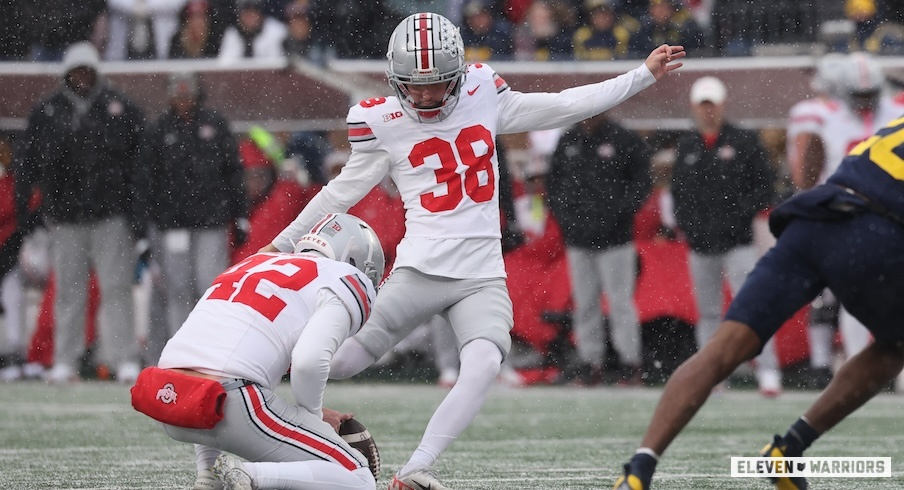
Typical range: $50,000-$200,000

Punters​

Typical range: $50,000-$150,000

Long-snappers​

Typical range: $10,000-$50,000
 
Upvote 0

College football 2026: How much does each position cost?​

There has never been a better time to be a college football player competing at the highest level. Just ask their agents.

Last year, we dug into how much Power 4 starters are earning at every position. To find out just how much their value has increased 12 months later, we surveyed more than a dozen general managers and front office staffers as well as a dozen agents last week at the annual Personnel and Recruiting Symposium in Nashville, Tennessee.

We asked the folks tasked with negotiating their contracts to help define the new price ranges for each position, based on the deals they've struck for 2026 and what each side now considers fair value. And they had a lot to say.

If every Power 4 program was carefully abiding by the new revenue sharing cap and spending the same amount, the price points for the deals would be easier to identify. But that's not the case. The sport's most competitive programs had the funds to go far beyond $20 million for their rosters this offseason. Agents say SEC and Big Ten programs continue to outspend the Big 12 and ACC. As one agent put it, the gap between good and elite feels greater than ever. This year's price ranges for deals reflect that, too.

These ranges do not capture what every player is making at the Power 4 level. There are plenty of elite outliers at College Football Playoff contenders with seven-figure deals this season. There are plenty more competing for a starting job in preseason camp while making $200,000 or less. GMs still believe they're getting a discount when they re-sign starters, so these price ranges tend to reflect the contractual cost of talent acquisition more than retention.

The elimination of the spring transfer portal, a period when teams tended to overpay out of desperation, resulted in fewer FBS scholarship players transferring this offseason. But it also created a new level of urgency for roster construction in December and the frantic two-week portal window in January.

"Now that there's not two windows, teams can't miss," another agent said. "People ask me all the time why the market's so high. The market's so high because you've got one shot at this. When the portal's over, that's your team."

College GMs are debating positional roster value every day while navigating a marketplace with no transparency and lots of skepticism about the numbers that get reported. Their head coaches are increasingly concerned about where this is all heading.

"I can tell you right now, with NIL rising 20%, 30%, 40% a year, it's not sustainable if we stay on the path we're on right now," Michigan coach Kyle Whittingham said.

As GMs and agents gather more data and experience with every deal, both sides agree business is booming like never before. But they're still seeing too much misinformation on social media about who's making what.

"You hear and read so much about everyone having $40 million rosters and every tackle is making $2 million, every corner is making $1.1 million and every edge rusher is making $1.5 million," an ACC GM said. "That's not reality."

Here's what they believe college football players are now earning to start and compete at the Power 4 level entering Year 2 of the revenue sharing era.

Quarterbacks​

Typical range: $1 million-$3 million
Then, you still have the truly elite tier. Oregon's Dante Moore could've been the No. 2 pick in the draft and signed a $54 million contract but preferred to stay in school. GMs believe Moore, Arch Manning (Texas), Julian Sayin (Ohio State) and the best of the best are getting revenue share guarantees but still earning just as much outside money in brand deals thanks to their NIL value.

"If you're in the ACC and Big 12, you're probably $1 million to $2 million," an SEC GM said. "If you're Big Ten and SEC, you're probably $2 million to $3 million and then plus, plus, plus for the elite."

Running backs​

Typical range: $300,000-$800,000

Wide receivers​

Typical range: $400,000-$1 million
Jeremiah Smith
has said he was offered $10 million to transfer from Ohio State at the end of last season. General managers surveyed by ESPN said they could easily see Smith earning $5 million to $6 million this year, plus millions more in NIL endorsements.

"Jeremiah Smith, Cam Coleman and Malachi Toney are the outliers," one agent said. "Whatever the f--- they want, you pay 'em."

Tight ends​

Typical range: $300,000-$600,000

Offensive tackles​

Typical range: $600,000-$1.2 million

Guards/centers​

Typical range: $400,000-$800,000

Edge rushers​

Typical range: $500,000-$1.2 million

Defensive tackles​

Typical range: $500,000-$1 million

Linebackers​

Typical range: $300,000-$700,000

Cornerbacks​

Typical range: $400,000-$900,000

Safeties​

Typical range: $300,000-$900,000
One contributing factor to the top of the safety market this offseason: Ohio State, Ole Miss and Georgia all needed to sign multiple starters via the portal. Add in two more coveted playmakers in LSU's Ty Benefield and Oregon's Koi Perich and you end up with lots of competitive recruitments.

Kickers​

Typical range: $50,000-$200,000

Punters​

Typical range: $50,000-$150,000

Long-snappers​

Typical range: $10,000-$50,000

I love the $10MM a year coaches whining about "unsustainable".

:lol:
 
Upvote 0

Ted Cruz expects Senate vote on Protect College Sports Act soon​

With college football in full swing, proponents of the Protect College Sports Act have launched an all-out blitz to push the legislation through the Senate before the chamber breaks in the coming weeks.

The bill aims to put guardrails around escalating spending in college sports as the industry struggles to adapt to a new model in which schools can pay players. Major conferences, Senate leadership and President Donald Trump have backed the bipartisan bill, yet it still faces pushback that could sink it before the chamber breaks this fall.

"This bill protects the billions of dollars that coaches and sports industry executives are making over the suppression of compensation for some of the most highly valued athletes in the world," Democratic Sen. Chris Murphy of Connecticut said on a call with reporters Monday. "What we're being asked to do is to basically allow colleges and conferences and the NCAA to illegally collude."

Murphy's opposition followed a high-profile weekend push by Sen. Ted Cruz, a co-sponsor of the bill, who appeared Saturday on ESPN's "College GameDay" to make the case for its passage. Cruz, a Texas Republican, spent nearly 10 minutes explaining why he thinks the legislation is important as loud boos rang out from the University of Texas crowd behind him.

Launched by Cruz and Democratic Sen. Maria Cantwell of Washington in late May, the bill that has been discussed all summer is back in focus with a vote possible before Congress goes back into recess for the midterm elections.

Cruz, at a news conference in Washington alongside Cantwell, college athletes, coaches and other members of Congress, said he expected the Senate to vote on the bill this week or next. He is hoping it passes with resounding support from both sides of the aisle.

"I believe we are going to get this done," Cruz said. "I have a very high level of confidence that the House will pass this bill, and one of the best ways to do that is get a big bipartisan vote coming off the Senate."

From high-profile coaches to boosters, supporters are lining up. High-profile supporters include billionaire Texas Tech alumnus Cody Campbell, former Alabama coach Nick Saban and current Colorado coach Deion Sanders, who have been featured in commercials across the country as football season begins.

"The Protect College Sports Act ends the NIL chaos in college athletics by protecting our student-athletes and teams and safeguarding women's sports and Olympic programs," Saban says in an ad.

Basketball coaches John Calipari of Arkansas, Mark Few of Gonzaga and Kelvin Sampson of Houston are also among those in favor.

"I think this clears up about 75-80% of our issues," Calipari said in Washington. "Nothing is perfect. This is a bite out of the apple."

Echoing Calipari, Few said: "This bill might not be perfect, but it's far, far away the best thing we got out there right now."

The bill still faces a tight timeline and high vote threshold. High-profile support hasn't been the issue for the bill since it was introduced months ago. After months of negotiations, the Big Ten and Southeastern conferences got on board with the bill in late July. But it remains unclear whether the legislation has the support needed to clear the Senate's 60-vote threshold.
.
.
.
continued
 
Upvote 0
The only one telling the truth
"This bill protects the billions of dollars that coaches and sports industry executives are making over the suppression of compensation for some of the most highly valued athletes in the world," Democratic Sen. Chris Murphy of Connecticut said on a call with reporters Monday. "What we're being asked to do is to basically allow colleges and conferences and the NCAA to illegally collude."

The hypocrisy of the tv ads for this thing is sickening.
 
Upvote 0
Where Congress is at right now on the Protect College Sports Act: The Senate voted 74–24 on September 15, 2026, to advance the bill past a procedural hurdle, and formal consideration and final debate are underway this week. Next Step: If the Senate passes the legislation, it will move to the U.S. House of Representatives.

What is the Protect College Sports Act? What would the bill do?​

i

Senator Ted Cruz stumped for the bill he co-sponsored at a recent news conference on Capitol Hill alongside NCAA athletes and coaches.

The U.S. Senate is planning to vote in the coming days on a bill that would significantly shape the future of college sports.

The Protect College Sports Act addresses myriad topics that are contributing to an unstable and often messy period for the college sports industry as it transitions to a more professional model for its biggest schools and most popular sports. The bill is the result of more than a half-decade of steady lobbying from the NCAA, conferences, their schools and other advocacy groups. It will be the first bill on this topic to make it to a full Senate vote, and if approved would move on to debate in the House of Representatives, where it could change.

In the past two weeks, lawmakers and others have made a major push to try to draw attention to the bill. Supporters have made bold claims that the treasured American institution of college sports will be irreparably harmed if Congress doesn't act. Opponents say the bill is an attempt to restore authority to a set of power brokers who have a long history of exploiting athletes. Both sides have dabbled in bad sports analogies, hyperbolic warnings and misleading statements.

As a crucial vote approaches, let's sort the truths from the myths in some of the public statements on the issue and add context to how the college sports system currently works and what the Protect College Sports Act would actually do to change it.

"This is about reining in the bad practices that are happening in college sports today, the runaway costs... [and] the runaway arms race in sports spending." -- Sen. Maria Cantwell (D), co-author of the PCSA

The PCSA increases the amount of money schools can spend on direct payments to their players by $27.5 million, more than doubling the current $21.5-million spending cap. The bill does not include any provision that would require or encourage athletic departments to spend less money.

The bill does try to crack down on the common practice among wealthy teams of funneling "above-the-cap" money to their players by arranging endorsement deals that serve as de facto added payroll. Cantwell argues that a law that creates a hard cap on player payments will help stop the spending race.

The college sports industry tried to install a hard cap last June through the House Settlement, a deal that ended a series of antitrust lawsuits against the NCAA and its power conferences and established new rules about how athletes are paid. The leagues built a new enforcement group called the College Sports Commission to make sure the name, image and likeness deals athletes sign with groups other than their schools are legitimate endorsements.

So far the CSC has been unsuccessful because rich teams and boosters have not committed to following the rules they helped to negotiate in the House Settlement. Despite a cap of $21.5 million this year, roughly 30 football teams have a payroll of $30 million or more, according to industry sources that help facilitate player payments. About half of those teams have payrolls that exceed $40 million.

"There would have been a lot of criticism if that number would have been just at the House Settlement number," Sen. Eric Schmitt, one of the bill's co-sponsors, told ESPN when asked about the large increase in the spending cap. "Are you going to see a lot of Group of 6 schools hit that number? Maybe not right away. But you've got a chance now with a structured deal so this doesn't continue to spiral.

If the PCSA becomes law, the CSC would have more legal backing to be able to enforce those rules. Schools that circumvent the cap would risk violating federal law. However, it's not clear if that increased power will be enough to stop the current methods for circumventing the cap, nor does it stop teams and their funders from potentially finding new loopholes to exploit.

Even if a new law does successfully cap direct payments to players, college sports programs have a long history of devising creative ways to spend money on things like facility upgrades or increased support staff to get an advantage over their rivals in recruiting. In a report published last week, Cantwell shared that from 2005 to 2023 (before schools began paying players directly) the college sports arms race caused increases of 322% in recruiting costs, 300% in sports equipment and "a whopping 370%" in coaching salaries.

The PCSA makes no effort to tamp down those costs or dissuade schools from continuing to spend beyond their means in any of those expense categories. The bill does create a commission that is tasked with studying "whether any intercollegiate sport should be subject to spending or cost limitations." Cantwell did not respond directly to questions about why the bill made no effort to cap any athletics spending other than money directly flowing to players.

"If we don't act, we will see 30 to 50 competitive football programs in this country and the remainder of the programs go under." -- Sen. Ted Cruz (R), co-author of the PCSA

The authors of the PCSA have said they set out to maintain the current "big tent" format of FBS-level football by slowing conference realignment and providing an opportunity for multiple conferences to negotiate future TV rights deals as a group, a change that would likely increase the money flowing to those schools.

The bill prevents Power 4 conferences from growing beyond a total of 19 teams. The Big Ten currently has 18 teams. The SEC has 16. It would also force any school wanting to jump from one Power 4 conference to another to spend three years as an independent before joining the new league -- although that waiting period would no longer apply after 2031.

These provisions were designed to keep the Big Ten and SEC -- both of which have a sizable financial advantage over other conferences -- from merging and creating a new "super league" that would create a permanent divide between them and the roughly 100 other FBS teams. After a June hearing on the bill, Cantwell said "we're not going to let the most powerful and richest conferences dictate to the rest of America what's going to happen to 500,000 athletes."

However, during the next two months, the Big Ten and SEC withheld their support until lawmakers doubled the salary cap, giving their schools a path to maintaining their significant financial advantage.

The current cap limit ($21.5 million) was designed so that schools like West Virginia and Wake Forest could have a chance to build their roster with roughly the same spending power as Ohio State and Texas. So far, it has not been successful. According to industry sources, the richest programs are spending tens of millions more than other Power 4 schools.

That new cap more realistically meets the market for the couple dozen teams at the rich end of the spectrum who are already spending at least $30 million on just their football payroll. Other teams will likely struggle to find ways to keep pace in recruiting.

Rather than leveling the playing field, which was what most college sports officials have repeatedly asked Congress to do, the new cap could end up cementing the gap between the haves and the have-mores with a federal law. Cruz declined multiple requests for an interview from ESPN for this story.

The PCSA's potential impact on future conference affiliations and TV rights deals has media companies -- including ESPN, Fox Sports and their parent companies -- heavily invested in the outcome.

Disney, along with companies such as Paramount Skydance, parent of CBS, reported in financial documents that they paid for lobbying on college sports legislation.

And both ESPN chairman James Pitaro and Fox Sports CEO Eric Shanks were among participants (others included ESPN football commentators Nick Saban and Tim Tebow) in part of a presidential advisory committee that formed after President Donald Trump's "Saving College Sports" roundtable. Neither ESPN nor Fox Sports have staked public positions on the PCSA, though both have multibillion-dollar deals with conferences -- ESPN with the SEC and Fox Sports with the Big Ten -- that support it.

"We are ecstatic that the players are getting paid; that's not the issue. The issue is [some players are] going to a separate school every year and playing against student-athletes who are 27, 28 years old." -- Craig Robinson, executive director of the National Association of Basketball Coaches, which supports the bill

The PCSA directly addresses two of the most visible issues roiling coaches and fans in recent years: the increase in players transferring schools and the NCAA's inability to enforce eligibility rules. The bill would allow athletes to transfer once during their career without having to miss a season, restoring an old NCAA rule that was struck down by legal challenges.

The bill also limits athletes to a five-year window to play college sports, which begins the year they turn 19 or the year they finish high school. Those eligibility requirements are identical to a new rule adopted by the NCAA in June. While several outgoing seniors have challenged part of the eligibility rules in lawsuits this summer, so far no one has raised a legal challenge to the new age-based limits. If the PCSA becomes law, the NCAA would have a stronger case to keep athletes in their late 20s out of college sports if any older players were to file lawsuits.

Oluchi Okananwa, a Maryland basketball player and one of the leaders of a group working to unionize college athletes, said in a news conference last week that players are in favor of more structure. However, Okananwa believes those rules should be established through a collective bargaining agreement with players rather than dictated by Congress.

Some senators who oppose the PCSA, such as Alabama's Tommy Tuberville, agree with the transfer and eligibility parts of the bill but believe that the federal government's intervention in college sports should stop there.
.
.
.
continued

 
Upvote 0

Who Does the Protect College Sports Act Protect?​

Students debate the merits of a bill to regulate student athlete eligibility, transfers and compensation.​

Editor’s note: In this Future View, students discuss collegiate athletics and the Protect College Sports Act.

End Revenue Sharing

Name, image and likeness deals in collegiate athletics have transformed athlete compensation into a Wild West of unevenly regulated sponsorships and transfer portals. Congress must decide whether to treat collegiate athletes as students who participate in an education-based amateur athletic system or as employees of the institutions they represent on the field. As a Division I athlete, I believe Congress is right to codify name, image and likeness compensation but must eliminate revenue sharing between athletes and universities.

Direct compensation removes the focus of an undergraduate education as the core principle of collegiate athletics. While the Protect College Sports Act attempts to distinguish collegiate athletics from professional sports legally, any system that allows universities to pay players for athletic performance creates another level of professional competition. Striking the revenue-sharing provision in the pending legislation would help re-establish an emphasis on the student aspect of student athlete. It would also help prevent nonrevenue sports from being cut to remain below the revenue-sharing cap, further protecting amateur athletic competition.

NCAA athletes have competed for more than a century under athletic scholarships, enabling them to obtain a degree while competing at a high level. But when universities directly pay athletes to play, those students have an incentive to dedicate time and energy to their sports and neglect their studies. Amateur athletic competition has been a staple of American society since the late 19th century, and Congress has the opportunity now to preserve the place of college athletics in that tradition.

—Danny Auffant, U.S. Naval Academy, political science

Balancing Exit and Voice

College sports have become a national market governed by an increasingly fragmented set of rules. A national framework therefore has a strong rationale. But uniformity alone doesn’t make a system fair.

American economist Albert Hirschman argued that people facing an unsatisfactory institution possess two basic forms of power: exit and voice. The Protect College Sports Act succeeds because it balances the two.

The bill would limit athletes’ ability to exit by establishing national rules for transfers and eligibility. Athletes would receive one transfer without losing eligibility, while a second transfer would generally require sitting out a year. The legislation would strengthen their voice through representation. Current or recent athletes would make up at least one-third of athletic-association bodies with rule-making authority, and an athlete ombudsman would help resolve disputes.

The current rules giving athletes the right to earn money from their name, image and likeness aren’t the same as giving them power over the institutions governing their careers. College sports are a national industry and can’t be governed by fifty competing rule books. A federal framework makes sense. Its legitimacy, however, rests on a simple principle: When Congress limits athletes’ ability to exit, it must ensure that their voice inside the system is real.

—Wesley Tzeng, National Chengchi University (Taiwan), money and banking

Beware the Antitrust Exemption

Congress shouldn’t pass the Protect College Sports Act, because the legislation would heighten the ability of the NCAA and university athletic programs to exploit college athletes.

Several players groups have publicly opposed the bill—and for good reason. The National College Players Association called it “an unprecedented federal assault on college athletes” that subverts their rights and gives special immunity to the NCAA. The bill would grant the NCAA an antitrust exemption, giving it power to regulate transfers and eligibility and cap how much money athletes can earn through revenue sharing. Meantime it would take away student athletes’ ability to use the free market to maximize their earnings by denying them the ability to bargain collectively, negotiate their own opportunities or sue for damages.

College sports generate billions of dollars off students who put their bodies on the line. Any legislation that purports to protect them should do more than protect universities’ pockets.

—Max Watert, Quinnipiac University, undecided

Leveling the Playing Field

As a former student athlete who went through Division I recruitment, I believe the Protect College Sports Act represents a step forward for collegiate athletics. The proposed legislation would pre-empt the current patchwork of conflicting state laws and establish a national standard for name, image and likeness rights. In doing so, it would provide clear expectations for institutions and student athletes across the country and promote fair competition.

By standardizing NIL regulations, the legislation would allow student athletes to monetize their NIL rights while providing necessary oversight through a mandatory reporting system. The framework includes important safeguards, including agent registration, limits on agent fees and the creation of a database to assist athletes in understanding the fair market value of their endorsement opportunities.

The bill’s protections extend beyond financial matters. It would require medical coverage for sports-related injuries, guarantee scholarships for up to 10 years to encourage degree completion, and establish clear transfer eligibility rules to reduce disputes and roster instability within athletic programs.

By creating a level playing field at the federal level, the Protect College Sports Act will benefit student athletes and preserve the spirit of competition that defines collegiate sports.

—Jane Martin, University of Southern California, business administration
 
Upvote 0
Back
Top