
• New here? Register here now for access to all the forums, download game torrents, private messages, polls, Sportsbook, etc. Plus, stay connected and follow BP on Instagram @buckeyeplanet and Facebook.

Should semipro/college players be paid, or allowed to sell their stuff? (NIL and Revenue Sharing)

The difference is we can’t spend our money over the $20M cap. We have to spend donations beyond that. So it’s less about franchise value/ media rights/ merch sales/ fan base and more about big dollar donors, particularly billionaires.

Even when you dig into billionaires guys like Phil knight ($35B) could drop $40-50M a year and it’s pocket change. Mark cuban at $6B has more of a limit where $20-30M might be hard to sustain. Matt Campbell at TTech is probably in the 5-10B range. Even if we were to get a guy like LeBron at $1.5B $20M a year would be a lot. Not bad if it were a 1 time donation, but the schools need that money every year and that’s a lot to ask. Particularly when most of their assets likely aren’t liquid.

OSU has a supposedly great business school. If the people inside of it can't figure out a way to make a profitable business venture out of this that oh-by-the-way is based on the first or second most valuable sports franchise in CFB then they shouldn't be able to hold their head up on campus.

Look at what the Guggenheim group is doing with the Dodgers in MLB for starters. It's a lot more than just dumb luck of being in the L.A. tv market and think to ourselves "How do we build an eco system that creates non-capped advantages to the OSU football franchise"? We need to quit thinking in such linear terms as "donate money to the NIL fund."


I would take advantage of a huge alumni base that didn't have the black swan billionaire and make the Buckeye Venture fund. People invest rather than donate. It needs to be successful obviously but given that it is-you have cap workaround #1- offer players an equity share and or get paid to advertise for it. It would invest in many things (like all the midwest tech hub stuff in Columbus) but for sure I'd look at doing these:

Real estate development: Olentangy district development-get into the land development business as part of the Buckeye Venture fund.

Media: Create a direct to public media company that gets around the shared BTN/FOX money. Distribute content directly to consumers, Netfilx etc etc

Marketing company: They are doing this with the uniform patch project. When a player signs with OSU he gets to participate in the "Buckeye sports group" or whatever you call it. The money earned off the brand is for OSU only and is distributed around the cap, directly to players. Also what I feel we are lite on is marketing the NIL value of our guys more aggressively. I mean the real NIL value, not this fake donation/write off shit. Continue it for them after OSU...become a sports agency inside our version of Guggenheim.

Last but not least, look at the deferral play the Dodgers are using. Your investments from alumni/public give you a "float" use it, make it grow and then pay players more but later. It's a trade off as old as time and it works for both parties.

They need to stop fucking around and trying to compete under the old system of a University's hierarchy. It creates blind spots, mis-alignment and lethargy. Like it or not, you are in a different environment now. Adapt or die.
 
Upvote 0
NIL has ruined college football as we knew it. Lots of players dont come because they want to be a "Buckeye" but because we offer a NIL or a larger NIL. It's hard for me to regard them as such when they are not here for the "team"
Just look at how many players left this year. That's disgraceful.
The OSU is buying and selling players just like the pro's do.
So sad. It seems most fans cheer more for certain players than for my beloved Buckeye's.
GO BUCK!
 
Upvote 0

Is there a changing of the guard among the blue bloods?

There could be a massive change coming to the college football and basketball hierarchys.

Ohio State’s standing in the historical hierarchy of college football will never be questioned. The Buckeyes’ on-field success, combined with school traditions, has made Ohio State a giant in a sport that dates back to just after the Lincoln Administration.

But in the ever-changing landscape of college athletics, it’s worth wondering if there’s a changing of the guard amongst the blue bloods. Ohio State won a national championship in 2024, but it has struggled in some ways to adapt to the advent of the transfer portal and NIL. Other programs that have been blue bloods over the years, including Alabama, Oklahoma, USC, and Texas, have not been as dominant in recent seasons.
To be clear, Ohio State is still a great program. They’ve been one of the winningest programs in college football over the last five, 10, 15, and 20 years. They have three national championships this century.

But with some of the other programs no longer what they once were, it begs the question of whether new blood is being injected into both college football and college basketball. Look at the teams that played in the national championship this season. Miami and Indiana aren’t considered blue bloods of college football. Sure, Miami had really good teams in the ‘80s, ‘90s, and early 2000s. But they haven’t had the historical dominance a blue blood typically has.

Blue bloods have built their success on recruiting the best players, hiring the best head coaches, and having the most on-field success. But look at blue blood programs like Kentucky in college basketball. They’re struggling to recruit because they haven’t yet figured out how to navigate NIL most effectively. Other college basketball players, like Kansas, have struggled in recent seasons.

The transfer portal and NIL have brought parity to both college football and basketball. That’s great. But some blue-blood programs have struggled to catch on. They have been used to doing things a certain way for so long, and now they have to adapt quickly to a whole new era of college athletics.

Meanwhile, other schools, particularly at the Power Four level, that didn’t have much of a chance in previous seasons, now feel like they have an opportunity. The playing field has been leveled. It’s benefited schools like Indiana, Miami, Ole Miss, Texas Tech, Auburn, Houston, and many others. Players don’t necessarily have to go to the historic blue bloods to get the best NIL deal and/or more playing time. These schools have athletic departments that are embracing a new era of college athletics.
.
.
.
continued
 
Upvote 0
Parity is obviously here. Up to Ohio State to leverage their brand power to stay on top.


"The current state of college football is not sustainable."

BS. Indiana had the same access to the players in the portal as everyone else. It's one thing to spend money -- Indiana did but not as much as you thought per Cignetti. It's another to coach it up, put it in the right place and call the right plays. Texas Tech was close. Ole Miss, a mid-major in the SEC, was too. Indiana weaponized the current land$cape. Try to catch up. There will be others. Turns out, the portal and NIL weren't separators. They leveled the playing field. For decades, what Indiana did was not possible. Now Cinderella is driving a Maserati. As messed up as things are off the field, the game has never been more accessible, enjoyable and fun.”

 
Upvote 0
NIL has ruined college football as we knew it. Lots of players dont come because they want to be a "Buckeye" but because we offer a NIL or a larger NIL. It's hard for me to regard them as such when they are not here for the "team"
Just look at how many players left this year. That's disgraceful.
The OSU is buying and selling players just like the pro's do.
So sad. It seems most fans cheer more for certain players than for my beloved Buckeye's.
GO BUCK!
No offense but this narrative is so tired. Do you not think that OSU, Bama, Oregon, etc didnt pay kids before? I saw this same retort when people saw this same statement. Its seems like fans who sound like yourself were more content when players just got paid by the dumpster of the Piggly wiggly or IGA. Theres a reason why Saban, Smart, Meyer, Carroll, etc were able to consolidate so much talent annually. And it wasn't because they wanted to matriculate from the prestigious universities.

The Program, Blue Chips, told fictional stories while we all watched the Pony Excess 30 for 30(or like myself, read the book too).
The NCAA chose to make billions from free labor until they couldn't any longer due to their greed. OSU will always be OSU to me. And I'll still love rooting for them, because I know they can and will pivot with the times. Its funny how if OSU had won it all this year, your love for CFB wouldn't have waned...
 
Upvote 0

Is there a changing of the guard among the blue bloods?

There could be a massive change coming to the college football and basketball hierarchys.

Ohio State’s standing in the historical hierarchy of college football will never be questioned. The Buckeyes’ on-field success, combined with school traditions, has made Ohio State a giant in a sport that dates back to just after the Lincoln Administration.

But in the ever-changing landscape of college athletics, it’s worth wondering if there’s a changing of the guard amongst the blue bloods. Ohio State won a national championship in 2024, but it has struggled in some ways to adapt to the advent of the transfer portal and NIL. Other programs that have been blue bloods over the years, including Alabama, Oklahoma, USC, and Texas, have not been as dominant in recent seasons.
To be clear, Ohio State is still a great program. They’ve been one of the winningest programs in college football over the last five, 10, 15, and 20 years. They have three national championships this century.

But with some of the other programs no longer what they once were, it begs the question of whether new blood is being injected into both college football and college basketball. Look at the teams that played in the national championship this season. Miami and Indiana aren’t considered blue bloods of college football. Sure, Miami had really good teams in the ‘80s, ‘90s, and early 2000s. But they haven’t had the historical dominance a blue blood typically has.

Blue bloods have built their success on recruiting the best players, hiring the best head coaches, and having the most on-field success. But look at blue blood programs like Kentucky in college basketball. They’re struggling to recruit because they haven’t yet figured out how to navigate NIL most effectively. Other college basketball players, like Kansas, have struggled in recent seasons.

The transfer portal and NIL have brought parity to both college football and basketball. That’s great. But some blue-blood programs have struggled to catch on. They have been used to doing things a certain way for so long, and now they have to adapt quickly to a whole new era of college athletics.

Meanwhile, other schools, particularly at the Power Four level, that didn’t have much of a chance in previous seasons, now feel like they have an opportunity. The playing field has been leveled. It’s benefited schools like Indiana, Miami, Ole Miss, Texas Tech, Auburn, Houston, and many others. Players don’t necessarily have to go to the historic blue bloods to get the best NIL deal and/or more playing time. These schools have athletic departments that are embracing a new era of college athletics.
.
.
.
continued

Top 5 portal class begs to differ. Aint going anywhere son
 
Upvote 0
The payments of prior times don’t even Come close to the machinations of NI! Servitude. The bidding, paying, processes of the NIL program are what caused all I said. It’s like a cattle market.
No offense but this narrative is so tired. Do you not think that OSU, Bama, Oregon, etc didnt pay kids before? I saw this same retort when people saw this same statement. Its seems like fans who sound like yourself were more content when players just got paid by the dumpster of the Piggly wiggly or IGA. Theres a reason why Saban, Smart, Meyer, Carroll, etc were able to consolidate so much talent annually. And it wasn't because they wanted to matriculate from the prestigious universities.

The Program, Blue Chips, told fictional stories while we all watched the Pony Excess 30 for 30(or like myself, read the book too).
The NCAA chose to make billions from free labor until they couldn't any longer due to their greed. OSU will always be OSU to me. And I'll still love rooting for them, because I know they can and will pivot with the times. Its funny how if OSU had won it all this year, your love for CFB wouldn't have waned...
 
Upvote 0
Parity is obviously here. Up to Ohio State to leverage their brand power to stay on top.


"The current state of college football is not sustainable."

BS. Indiana had the same access to the players in the portal as everyone else. It's one thing to spend money -- Indiana did but not as much as you thought per Cignetti. It's another to coach it up, put it in the right place and call the right plays. Texas Tech was close. Ole Miss, a mid-major in the SEC, was too. Indiana weaponized the current land$cape. Try to catch up. There will be others. Turns out, the portal and NIL weren't separators. They leveled the playing field. For decades, what Indiana did was not possible. Now Cinderella is driving a Maserati. As messed up as things are off the field, the game has never been more accessible, enjoyable and fun.”


I had an old college football preview from SI, maybe 1988 or 1989 saying the same thing.

:lol:

Some of this talk about old institutions failing to adapt is correct. I wish OSU was moving "faster" but I am not privy to all the info and constraints they are. My ringside seat it doesn't look like OSU is all that far off the mark and recency bias aside, this "new generation" is going to have to show some staying power before I'll say the king is dead.
 
Upvote 0
The payments of prior times don’t even Come close to the machinations of NI! Servitude. The bidding, paying, processes of the NIL program are what caused all I said. It’s like a cattle market.
Its always been a cattle market! Regardless of the money being more or not. People in the 80s, 90s, 2000s, etc have said that CFB was dead or they'd stop watching because of some reason, and it usually came back to unfair advantages in the sport. Which in the past was whispered, but it was still about the money. You don't think there was "payment servitude" in the past with SMU, Oklahoma, Nebraska, in the 70s and 80s? Come on now. Its just gasping and clutching pearls in a new form. Nothing is new under the sun
 
Upvote 0
Its always been a cattle market! Regardless of the money being more or not. People in the 80s, 90s, 2000s, etc have said that CFB was dead or they'd stop watching because of some reason, and it usually came back to unfair advantages in the sport. Which in the past was whispered, but it was still about the money. You don't think there was "payment servitude" in the past with SMU, Oklahoma, Nebraska, in the 70s and 80s? Come on now. Its just gasping and clutching pearls in a new form. Nothing is new under the sun
blah blah blah is BKB a sexual thing
 
Upvote 0

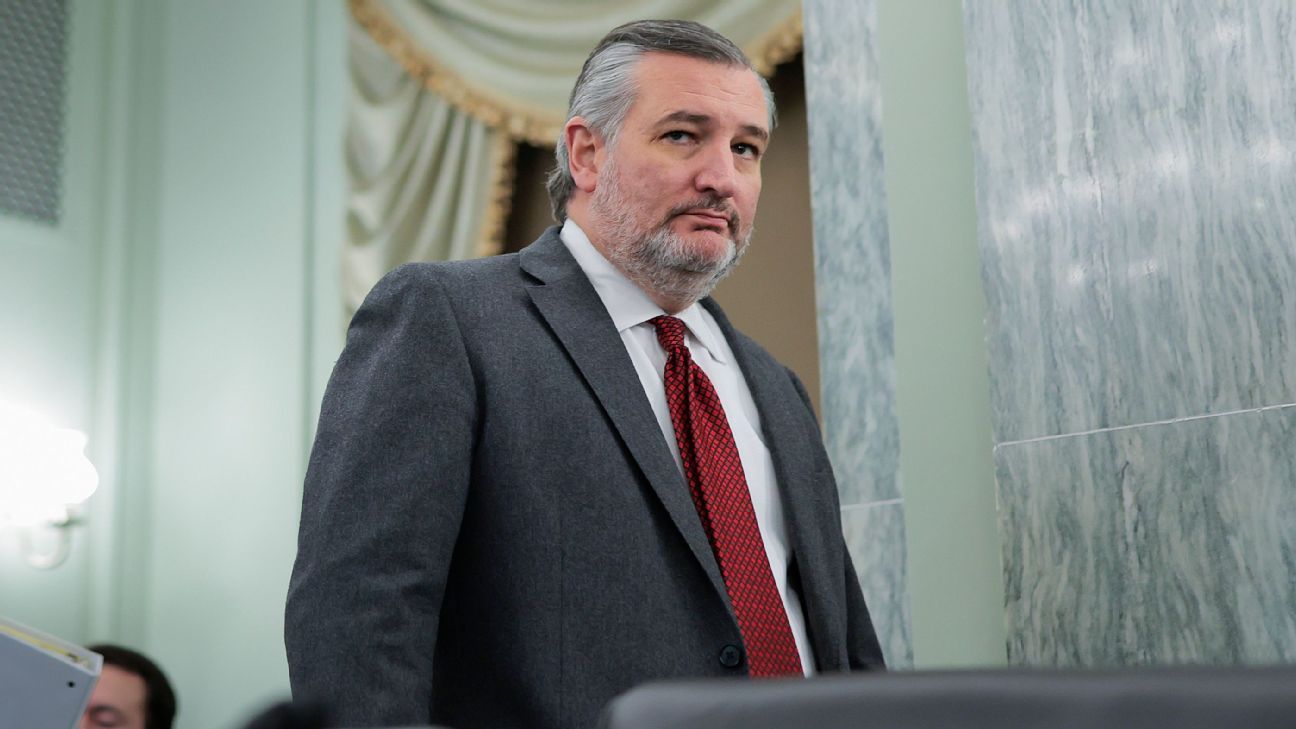
Sen. Ted Cruz against idea of college athletes as employees

Sen. Ted Cruz said it is "absolutely critical" that any federal law related to college sports includes a provision that prevents athletes from being deemed employees of their school.

The Republican from Texas, who holds a key position in advancing NCAA legislation as chair of the Senate Commerce Committee, told ESPN in an interview Wednesday that Congress might run out of time to act if it can't find a bipartisan solution in the coming months. During a yearslong effort to restore order to the college sports industry, Republicans and Democrats have remained largely divided on whether college athletes should have a future avenue for collective bargaining, which would require them to be employees.

"Clarifying that student athletes are not employees is absolutely critical," Cruz told ESPN. "Without it, we will see enormous and irreparable damage to college sports."

Cruz and NCAA leaders say many smaller schools would not be able to afford their teams if athletes had to be paid and receive benefits as employees. However, as lawsuits over player contracts and eligibility rules continue to mount, a growing number of frustrated coaches and athletic directors from major programs say they are open to collective bargaining as a solution.

"I've always been against this idea of players as employees, but quite frankly, that might be the only way to protect the collegiate model," Clemson football coach Dabo Swinney, a longtime defender of amateurism, said at a news conference last week.

The NCAA and its members have spent millions of dollars in the past several years lobbying Congress for a bill that would grant the association an antitrust exemption, supersede state laws related to college sports and block attempts to gain employee status for athletes. Despite more than a dozen Capitol Hill hearings and a long list of proposals, no bill has reached a full vote in either chamber of Congress to date.

Senate Commerce Committee staff told ESPN that Cruz and a bipartisan group of senators have made significant progress on a new draft of a bill but are at an impasse on the employment issue. Cruz said Democrats and labor unions are concerned about setting a broader precedent for other industries by closing the door on college athlete employment, which has led to the stalemate.

"From a political perspective, you have labor union bosses that would love to see every college athlete deemed an employee made a member of a union and contributing union dues to elect Democrats," Cruz said. "It's terrible for college sports, but I get that there's some partisan appeal to it."

Sen. Maria Cantwell, the highest-ranking Democrat on the Commerce Committee, said in a statement to ESPN that she also sees "growing bipartisan interest" for Congress to act. She has proposed separate college sports legislation that doesn't advocate for athletes to be employees but leaves the door open for employment or collective bargaining in the future. She told ESPN that the committee "should move the ball forward with a hearing on this [topic]."

The large and expanding gap between the top tier of college teams and the rest of the NCAA has made it difficult to find a fair solution for all parties.
.
.
.
continued
 
Upvote 0
Back
Top