Install the app
How to install the app on iOS
Follow along with the video below to see how to install our site as a web app on your home screen.

Note: This feature currently requires accessing the site using the built-in Safari browser.
-
New here? Register here now for access to all the forums, download game torrents, private messages, polls, Sportsbook, etc. Plus, stay connected and follow BP on Instagram @buckeyeplanet and Facebook.
You are using an out of date browser. It may not display this or other websites correctly.
You should upgrade or use an alternative browser.
You should upgrade or use an alternative browser.
USC Trojans (official thread)
- Thread starter Taosman
- Start date







Captain Buckeye
Head Coach
Ah, I see it’s the same dead ass USC program.
Good. Schedule was too difficult otherwise
Good. Schedule was too difficult otherwise
Upvote
0







Hilariously pathetic.
USC vs San Jose State, season opener on Sep 5, 2009. 90 degrees, 12:30p kickoff, attendance was 84,325.Today’s attendance was announced as 51,144; which we know was much lower than that.Fans blame the heat and the fact SC was playing SJSU. But maybe it has more to do with success. USC was 102-26 from 2000-2009. They are 45-27 since 2020.2009 had the same opponent and similar weather conditions, what’s changed? Fans pushed through the heat before.
Upvote
0


BuckBackHome
Wolverine is largest member of weasel family
Are the fans just not all wearing red, head to toe?
Sarcasm font.
Upvote
0

‘The seats were like hot plates’: Why USC’s Coliseum looked so empty Saturday
Trojans fans faced a fairly simple calculation: A game against San José State weighed against four hours baking in 94-degree heat.
 www.nytimes.com
By the time Ted Barber Jr. soaked his cooling towel for the second time, the afternoon was winning its war of attrition. Frozen water bottles had melted away, lemonade had been drained to the last drop, and each fresh drenching of Barber’s towel evaporated within moments.
Barber and his wife were armed for the afternoon in section 218A of the Los Angeles Memorial Coliseum — hats on their heads, cooling towels at the ready, two frozen water bottles apiece. A few hours beneath an unobstructed sun steadily dismantled those defenses.
USC fans faced a fairly simple calculation Saturday: A game against San José State, a nearly six-touchdown underdog added after the Notre Dame rivalry went on hiatus, weighed against four hours baking in 94-degree heat with scarcely a patch of shade. By kickoff, acres of exposed red seats suggested plenty had done the math and found another way to spend their Saturday.
Barber followed USC home and away for six seasons without once leaving early, surviving even the bleakest days of the Clay Helton era. Lightheaded when he stood and worried about his wife facing heat exhaustion, the two left before halftime.
“As soon as we got to our seats, oh my god, the sun was just beaming,” Barber said. “We quickly realized that, yeah, I don’t think we’re gonna be able to make it.”
Roy Nwaisser, the longtime fan known as “USC Psycho,” has not missed a Trojans game since 1992. Though he stayed through USC’s 42-26 trouncing of the Spartans, he described the choice confronting less obsessive fans: How much discomfort could this game justify?
“There’s no world in which a 110-degree heat index is not going to affect the attendance at the Coliseum for the first game of the season against San José State with a 40-point spread,” Nwaisser said. “That’s the decision people are making: Is the agony going to be worth it for this game?”
USC announced a crowd of 51,144, but television cameras swept across expanses of untouched red in the Coliseum. It took little time for screenshots to race around social media as fresh ammunition for an old college football trope about Southern California fans: They don’t show up.
While the photographs easily captured the empty seats, they couldn’t explain them. Los Angeles was under a heat advisory Saturday, and Daniel Barkin, a USC season ticket holder since he was a student in 2009, decided the Coliseum was no place for his 4-year-old son. He watched fans dump water into hats and abandon their seats to congregate around umbrellas at Tommy’s Tavern. On the press-box side, Marjorie Gwinn said fans packed 10 deep beneath the eaves in search of shade.
“The seats were like hot plates,” Barkin said. “It was truly a sauna. … I remember previous openers where it was hot, but never this humid.
“It was a poor attendance showing, but also I think it looked even worse than it was.”
Esther Margulies, a USC professor of landscape architecture who studies urban heat, said shade can lower temperatures on paved surfaces by as much as 20 degrees, while exposed asphalt and concrete absorb and retain heat. Older venues such as the Coliseum, she said, were designed long before extreme heat became the consideration it is now.
In response to multiple questions from The Athletic, a USC spokesman said the school received a lot of feedback that weather was a factor in fans not showing up for the game. The school implemented a heat plan with additional cooling stations around the stadium and allowed fans to bring in additional water.
“We understand the factors that impacted Saturday’s attendance,” a statement from the school read. “We have high expectations and a premier home schedule this season, and we know the competitive advantage an electric Coliseum atmosphere can provide our program. We thank our fans who showed up Saturday and look forward to seeing increased attendance the rest of the season.”
Dave Arensberg, a Washington fan who moved from Seattle to Los Angeles last year, arrived without a ticket and watched resale prices fall until he bought one on SeatGeek for $18 about an hour before kickoff.
“A few minutes into the game I was actually impressed by how many people were there roasting in the sun,” said Arensberg, who also decided to escape the “scorching” heat by halftime.
Saturday was USC’s smallest announced crowd for a home opener since at least 2009. San José State drew 63,411 to the Coliseum in 2023 and 84,325 in 2009, although the latter came with USC ranked No. 4 deep in Pete Carroll’s reign.
Barkin said friends who skipped Saturday would have come for a better opponent, while those outside L.A. would never make the trip for a noon kickoff against San José State.
“This isn’t a college town where you can roll out of bed and walk over to campus,” he said.
USC has spent months dressing up 2026 as the year everything comes together. A 163,000-square-foot football headquarters opened this month as part of a $225 million athletics overhaul; the nation’s top-ranked recruiting class arrived; and athletic director Jennifer Cohen reaffirmed the mandate: championships and the College Football Playoff.
Then came the first chance to show off USC’s expensive new future — against an opponent absent from the original script.
USC and Notre Dame failed to extend their century-old rivalry last December, sending the series into hiatus and leaving the Trojans with an opening San José State filled for a reported $1.4 million.
USC eventually got the scheduling solution it sought, with Notre Dame returning in 2030 in an early-season window. But Saturday may have offered a preview of the years in between: a nearly six-touchdown spread to open the season, a punishing afternoon sun and swaths of empty Coliseum red.
If Notre Dame had been on the opposing sideline, Nwaisser said, “the math works out differently. The agony is worth it.”
Upvote
0
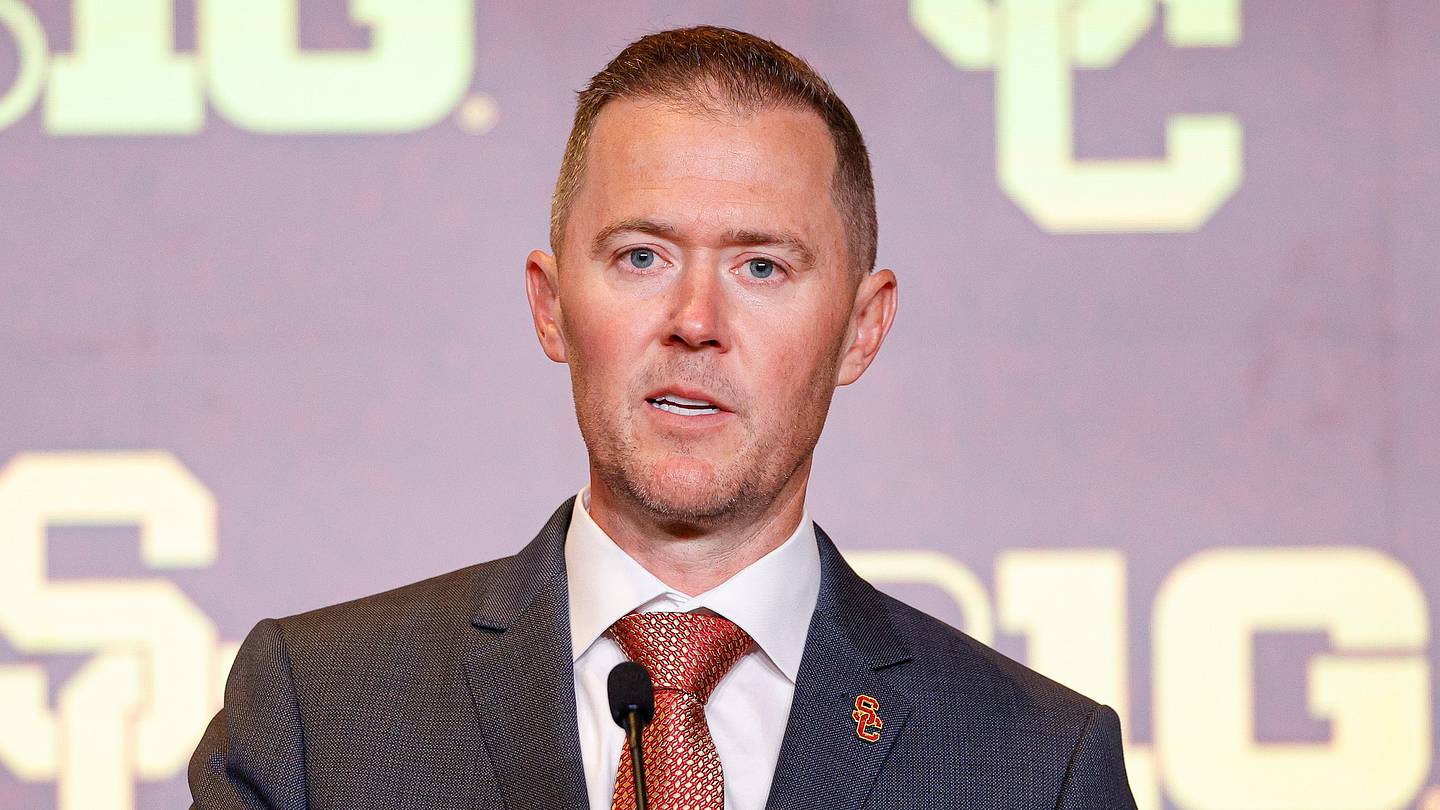
USC Athletics Acknowledge Season-Opening Attendance Concerns
Saturday’s No. 14 USC Trojans season opening 42-26 win against San José State brought plenty to talk about. USC’s freshmen showcased their talents, Gary Patters
 www.si.com
USC Athletic’s Statement
On Sunday, USC released a statement understanding the factors that led to the poor attendance.
“We have high expectations and a premier home schedule this season, and we know the competitive advantage an electric Coliseum atmosphere can provide our program. We thank our fans who showed up Saturday and look forward to seeing increased attendance the rest of the season,” the statement read, per an X post by The Athletic's Ira Gorawara.
In addition, the school said they received “a lot of feedback” that weather was a big factor drawing fans away.
Upvote
0