• New here? Register here now for access to all the forums, download game torrents, private messages, polls, Sportsbook, etc. Plus, stay connected and follow BP on Instagram @buckeyeplanet and Facebook.

TIME's Top 10 College Presidents

Not much of a surprise that Gordon Gee tops the list.
GBW editor Tom Beaver pinned this atop both boards with the title 'Leaders n Best'

Sure Mary Sue Coleman is on there, but who knew he was applying their beloved phrase to the university he despises.
 
Upvote 0
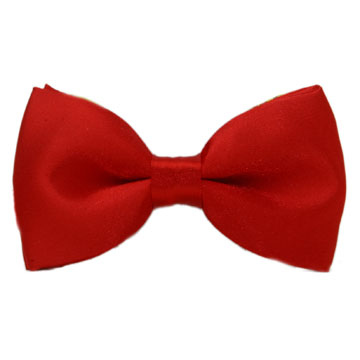
Gotta love the
bowtie.jpg
 
Upvote 0
Admissions
OSU's freshman class: big, bright | The Columbus Dispatch

6,550 frosh, with transfers 9,000 incoming students.

54% top 10% of their class
87% top 25% of their class
32% 30+ act score
80% 26+act socre
average act 27.5


personally im not the biggest e gordon gee fan around, yet his success speaks for itself. he has raised the academic standards, increased rankings, brought in more "qualified" students, is implementing a more pragmatic learning structure, fighting bureaucracies of the university (ie fighting the tenured profs, deans, etc by forcing change in many ways including through the change to semesters after many of them have resisted the curriculum overhaul-this forces it upon them), increased fund-raising, de-emphasized some of the traditional prof rules while encouraging a push away from academia etc.
 
Upvote 0
jimotis4heisman;1591562; said:
personally im not the biggest e gordon gee fan around, yet his success speaks for itself. he has raised the academic standards, increased rankings, brought in more "qualified" students, is implementing a more pragmatic learning structure, fighting bureaucracies of the university (ie fighting the tenured profs, deans, etc by forcing change in many ways including through the change to semesters after many of them have resisted the curriculum overhaul-this forces it upon them), increased fund-raising, de-emphasized some of the traditional prof rules while encouraging a push away from academia etc.

Because we all know that academia has no place in a university.:wink2:

BTW, I'm a pretty big fan of Gee's but in all honesty everything that's been accomplished over the last two decades traces back to the decisions that Ed Jennings, Dick Celeste (whatever your thoughts on him overall, he was good for Ohio State) and Celeste's board appointees (notably Wexner and Milton Wolfe) made.
 
Upvote 0
ORD_Buckeye;1591784; said:
Because we all know that academia has no place in a university.:wink2:

BTW, I'm a pretty big fan of Gee's but in all honesty everything that's been accomplished over the last two decades traces back to the decisions that Ed Jennings, Dick Celeste (whatever your thoughts on him overall, he was good for Ohio State) and Celeste's board appointees (notably Wexner and Milton Wolfe) made.


What, no credit for Holbrook? I'm shocked!
 
Upvote 0
Because we all know that academia has no place in a university.:wink2:

BTW, I'm a pretty big fan of Gee's but in all honesty everything that's been accomplished over the last two decades traces back to the decisions that Ed Jennings, Dick Celeste (whatever your thoughts on him overall, he was good for Ohio State) and Celeste's board appointees (notably Wexner and Milton Wolfe) made.
ill add that you followed that up privately with a note that you were fully jesting. i think we both agree it has its place, granted home many professors need to contemplate the oh all coveted question of many angels can dance on the head of a pin? my point more specifically was that this shift has been towards real life practical research (be it business, econ, medical, etc towards a more pragmatic approach and away from the ivory tower). further while those sorts of things may make for an interesting cocktail party discussion (for some) the reality is the university is pushing forward as an engine of innovation, creation and supply the world with not just educated persons, rather those who have and are learning real life type skills, applications, etc.
 
Upvote 0
jimotis4heisman;1591841; said:
ill add that you followed that up privately with a note that you were fully jesting. i think we both agree it has its place, granted home many professors need to contemplate the oh all coveted question of many angels can dance on the head of a pin? my point more specifically was that this shift has been towards real life practical research (be it business, econ, medical, etc towards a more pragmatic approach and away from the ivory tower). further while those sorts of things may make for an interesting cocktail party discussion (for some) the reality is the university is pushing forward as an engine of innovation, creation and supply the world with not just educated persons, rather those who have and are learning real life type skills, applications, etc.

I tend to disagree with you here for a couple of reasons. First and foremost, I firmly believe that the core of any great university worth the name is the traditional liberal arts and sciences, and while that would include such disciplines as physics, chemistry or biology, it would also include philosophy, history, political science and foreign languages. Business, law, medical and engineering schools are secondary--necessary but secondary. To firm up my argument, I'd ask you to consider all of the great, American universities, and this is a partial off the top of my head list, that don't have business schools (Princeton) or don't allow undergraduate majors in the ones they do have (Harvard, Chicago and Yale). Princeton has no law or medical school. Chicago has no engineering college. The one thing they all do have in common is great depth and breadth of quality in their liberal arts departments. A great university--even a public one--is not a trade school.

You might be surprised to know that much of the faculty grumbling about Gee during his first tenure at Ohio State came from business, law, engineering and medicine. He looked at Ohio State and felt that the liberal arts and sciences needed to be strengthened to make the university as a whole reach its potential. The result is that we currently have top 15 departments (I'm probably missing a couple) in psychology and political science, top 25 departments in English, history, physics and chemistry and numerous other liberal arts departments ranking in the top 40 nationally.

At Brown, the source of his criticism was precisely the opposite. There he saw a university very strong in liberal arts and fine arts but one that lagged its peers in hard sciences and research. He set about strengthening the latter, which led to the outcry and backlash and his ultimately departure.

My point is that, regarding Gee's underlying philosophy, I don't think he has any ingrained favortism towards any one aspect of the university (althought he is willing to elimante programs that he feels don't contribute to the university's fundamental mission) but rather views the university holistically. He's been outstanding at assessing a university of which he's taken charge and identifying the areas that need to be brought up to speed. Sometimes, this benefits the liberal arts and sciences, and sometimes this benefits research or business, law and medicine.

 
Upvote 0
ORD_Buckeye;1591898; said:
I tend to disagree with you here for a couple of reasons. First and foremost, I firmly believe that the core of any great university worth the name is the traditional liberal arts and sciences, and while that would include such disciplines as physics, chemistry or biology, it would also include philosophy, history, political science and foreign languages. Business, law, medical and engineering schools are secondary--necessary but secondary. To firm up my argument, I'd ask you to consider all of the great, American universities, and this is a partial off the top of my head list, that don't have business schools (Princeton) or don't allow undergraduate majors in the ones they do have (Harvard, Chicago and Yale). Princeton has no law or medical school. Chicago has no engineering college. The one thing they all do have in common is great depth and breadth of quality in their liberal arts departments. A great university--even a public one--is not a trade school.

You might be surprised to know that much of the faculty grumbling about Gee during his first tenure at Ohio State came from business, law, engineering and medicine. He looked at Ohio State and felt that the liberal arts and sciences needed to be strengthened to make the university as a whole reach its potential. The result is that we currently have top 15 departments (I'm probably missing a couple) in psychology and political science, top 25 departments in English, history, physics and chemistry and numerous other liberal arts departments ranking in the top 40 nationally.

At Brown, the source of his criticism was precisely the opposite. There he saw a university very strong in liberal arts and fine arts but one that lagged its peers in hard sciences and research. He set about strengthening the latter, which led to the outcry and backlash and his ultimately departure.

My point is that, regarding Gee's underlying philosophy, I don't think he has any ingrained favortism towards any one aspect of the university (althought he is willing to elimante programs that he feels don't contribute to the university's fundamental mission) but rather views the university holistically. He's been outstanding at assessing a university of which he's taken charge and identifying the areas that need to be brought up to speed. Sometimes, this benefits the liberal arts and sciences, and sometimes this benefits research or business, law and medicine.


im not saying the philosophical stuff isnt an important part, its something everyone should be exposed to. my pragmatic comments were actually aimed more at the law, business and other of your "secondary" colleges/programs that you addressed. the reality today is that their isnt this apprentice programs that you saw 50 years ago, even up to as little as 10 years ago. their is little to no learning curve in todays world, and i think the university is raising to that challenge. in my experience ohio state produces some very very good students, ones who are ready to compete and be successful in the real world, while not sacrificing them in making them people who cant think, apply new things or innovate, etc. while some/many may mock that, i applaud it. my point more succinctly i guess is that hes raised the educational standard to an amazingly high level without creating an ivory tower, to this point. put more bluntly, i wouldnt send my kid to an ivy league school, not over ohio state (or washington, or texas, etc). he (an others that you mentioned) have pushed the university close to or near that elite level which can do both, while producing high quality. i posted an article i think from the wsj in which it compared a few universities to the ivy elites, ohio state beat the pants off of those schools in earnings 10 years out, that number titled massively in favor of the university when you looked at it in raw numbers (ie the harvard mean student who was something like 700th in his class, vs teh 700th grad out of schools like ohio state). needless to say ive degenerated beyond the scope of this thread...
 
Upvote 0
I have met the new Dean of the Fisher College of Business when she was the #2 for Johnson & Johnson worldwide. I think that she is an inspired choice and will help turn that program around. They almost fell out of the top 100 in the Financial Times worldwide survey on MBAs. She's going to change that--big time.

It's an inspired hire you can credit in large part to Gee.
 
Last edited:
Upvote 0
No worries, JO4H. I think this discussion is perfectly in line with the thread. It shouldn't just be fawning over Gee but rather an honest discussion of his tenure as president that led to the recent accolades from TIME.

One of the most impressive things that's happened in my estimation (and Kirwan and Holbrook deserve credit for this also) is that Ohio State has maintained a high level of socio-economic diversity among its student body. Ohio State has fewer kids coming from 100K income families than other selective public universities and more first-generation college students than the national average for all public universities, not just selective ones.

That Ohio State has been able attract the 9th largest amount of research funding in the country, develop large numbers of top 20 and 30 departments and continually push its admissions standards up while remaining a university that allows the best and brightest in the state--who may not have had the opportunity to go to a top high school or grow up in a family where everyone was expected to go to college--the opportunity to move themselves up the socio-economic ladder is a tremendous accomplishment and is a fundamental part of why Gee describes Ohio State as, "The University of The American Dream."

There is a difference between being elite and being elitist. A university can be elite without being elitist. Conversely, one can be elitist, or faux elitist, without ever being elite in the first place. Ohio State understands the difference.
 
Upvote 0
ORD_Buckeye;1592024; said:
There is a difference between being elite and being elitist. A university can be elite without being elitist. Conversely, one can be elitist, or faux elitist, without ever being elite in the first place. Ohio State understands the difference.

I see what you did there...
 
Upvote 0
Back
Top